
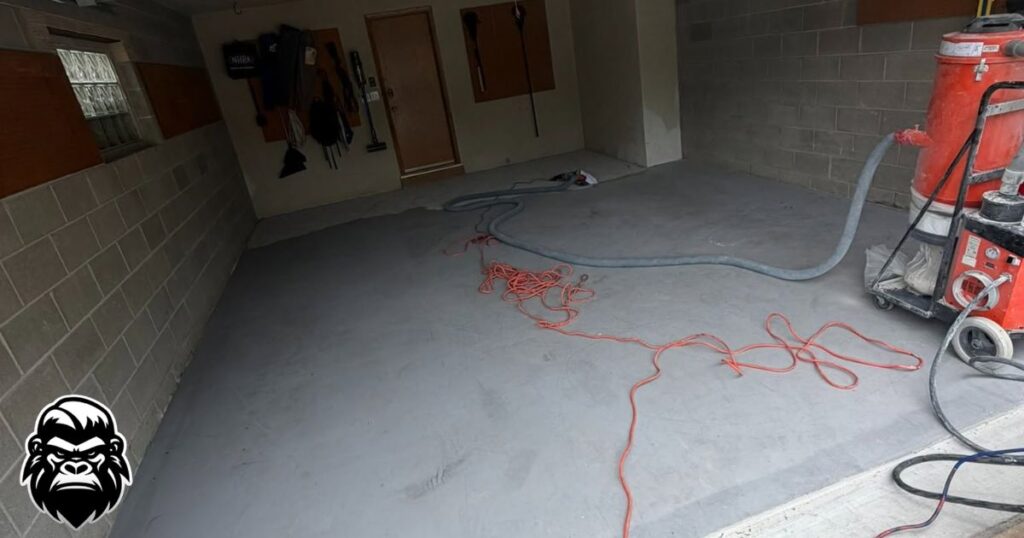
Garage floor salt damage in Addison, IL, starts when winter slush, chloride residue, and meltwater soak into bare concrete. The surface then pits, scales, dusts, and cracks as Illinois freeze-thaw cycles push moisture through the slab. Epoxy flooring helps stop that damage by sealing prepared concrete with a stronger epoxy floor coating system. Paint cannot do the same job.
Addison garages near Army Trail Road, Lake Street, I-355, and Route 83 see plenty of road salt during winter. Gorilla Floors repairs damaged concrete first, then installs garage floor coatings that help protect the floor from salt, tire traffic, and daily garage use.
Warning Signs of Garage Floor Salt Damage in Addison, IL
Salt damage rarely appears all at once. It usually starts near the garage door, where snow falls off tires and melts into the concrete. That wet line across the front of the garage often becomes the first area to pit, flake, or turn dusty. Addison homeowners may also see rough tire paths, loose gray powder, shallow craters, white salt film, or small chips that grow after each winter.
These signs mean water and salt have moved past the surface.
Once the top layer weakens, sweeping does not solve the problem. The concrete keeps shedding because the damaged paste no longer has strength. At that point, an epoxy floor coating can help only after the weak layer is removed, and the slab receives proper prep. A coating placed over soft concrete will fail. A coating bonded to sound concrete can protect the slab much better.
Why Illinois Winters Damage Garage Concrete
Illinois winters create the right conditions for garage concrete damage.
Snow, ice, slush, salt, and cold garage temperatures work together. The floor may freeze overnight, thaw during the day, then freeze again when the temperature drops. A freeze-thaw cycle happens when water freezes at 32°F and then thaws as temperatures rise. These freeze-thaw cycles affect hard surfaces across the Great Lakes region, including northern Illinois.
Concrete has pores. When salty water enters those pores, the slab can absorb more moisture. When that moisture freezes, pressure builds below the surface. Over time, the face of the concrete can pop, scale, or crumble. That is why a salt-damaged concrete garage floor often looks worse each spring.
The damage from one winter creates more open space for the next winter to attack.
How Road Salt Eats Into The Surface
Road salt lowers the freezing point of water, so it helps roads stay safer during winter. That same salty meltwater becomes a problem once it sits on garage concrete.
The FHWA’s guidance on chemical deicers and concrete pavement shows how water and salt solutions can affect concrete exposed to freezing conditions. In a garage, the same pattern starts when vehicles track in brine and slush. The salt does not need a large crack to start damage.
It can enter through small pores, saw cuts, joints, and surface wear. As the surface weakens, the floor becomes rougher. Rough concrete then traps more salt and water. This cycle makes garage concrete spalling repair more likely. The slab needs sealing before the next winter makes the damage deeper.
Why Bare Concrete Cannot Stop Salt Damage
Bare concrete is not sealed protection. It absorbs what lands on it. In an Addison garage, that means snowmelt, oil, tire grime, road film, and salt residue.
The floor may look dry after the water evaporates, but salt can stay behind in the pores. Each new round of wet tires can reactivate that residue and move it deeper into the slab.
A broom removes loose grit. It does not remove salt from open concrete pores. Mopping helps, but it cannot turn weak concrete into a sealed surface.
This is where epoxy flooring becomes useful. A properly prepared epoxy floor coating helps reduce absorption. It also creates a cleaner surface, so salt film can be removed before it grinds into the floor.
Why Garage Paint Fails Against Salt
Garage floor paint is not the same as epoxy flooring. Paint forms a thin film on top of the concrete. It often lacks the bond strength and build needed for hot tires, saltwater, and freeze-thaw stress.
In Addison garages, paint often peels near tire paths and flakes near the door.
Once salt water gets under the paint, the film lifts faster. The floor may look worse than bare concrete because loose paint traps dirt and moisture below it. That creates more work later. Before epoxy floor installation starts, old paint must be removed. The coating cannot bond to a weak painted layer.
A proper epoxy flooring company grinds the old coating away, checks the slab, repairs damaged areas, and builds the new finish on prepared concrete.
How Epoxy Floor Coating Protects The Slab
Epoxy floor coating protects garage concrete by creating a bonded surface over properly prepared concrete. The coating helps block moisture, salt residue, oil, and dirt from soaking into the slab.
Gorilla Floors installs epoxy flooring as a system. The process starts with the concrete, not the color. We look at salt pitting, cracks, old paint, oil, surface hardness, and moisture signs before coating begins.
The epoxy base bonds to diamond-ground concrete. A flake layer can add texture and visual coverage. A durable topcoat helps protect against tires, cleaning, and winter residue. This system gives Addison homeowners a garage floor that cleans more easily and protects better than raw concrete or paint.
Salt-Damaged Floors Need Prep First
A salt-damaged garage floor cannot be coated the same way as clean, new concrete. The damaged surface has to come off first. Grinding removes loose paste, old residue, failed coatings, and weak areas that would block adhesion. Cracks and pits need repair before the coating goes down.
Shallow pitting may need patching or skim repair. Larger spalled areas need closer review because the concrete must support the coating. Good epoxy floor installers do not hide damaged concrete under a shiny finish. They correct the surface first. That step affects the final look, the bond, and the life of the floor. A lower quote may skip this work. That can lead to peeling, bubbling, or flaking after the next winter.
Flake Floors Hide Winter Mess Better
A flake garage floor finish works well in Addison because it handles the look of winter mess better than a plain solid floor. Salt film, tire dust, and small debris show less on a blended flake surface.
The flakes also add texture under the topcoat. That helps when wet boots and tires bring moisture into the garage. Texture matters, but it must stay cleanable. A floor that is too rough can trap dirt. A floor that is too smooth can feel slick when wet.
Flake system flooring gives many Illinois garages a practical balance. It improves appearance, adds traction, and helps cover repaired concrete after proper prep.
For busy residential garages, flake often makes more sense than a plain finish.
Topcoats Matter For Winter Protection
Tires, salt film, shovels, bikes, storage bins, and wet boots all contact the top layer first. Some garages need a stronger topcoat because the floor sees parked vehicles every day. Others may need faster return to use, especially when the garage stores tools, work gear, or family items.
A polyurea flooring or polyaspartic topcoat may fit certain garage coating systems when cure time, wear resistance, or UV stability matters. The right choice depends on the slab and the way the garage gets used. The topcoat should not be treated as an upgrade afterthought. It is part of the system that helps protect against Illinois winter residue.
When Spalling Needs Repair Before Coating
Spalling happens when the concrete surface breaks away in chips, pits, or flakes. In Addison garages, it often appears near the door or tire paths where saltwater sits longest.
Small pits may look cosmetic, but they can hold moisture and chloride residue. Those spots grow when winter returns. Deep spalling can also expose weak concrete that will not support a coating.
A garage concrete spalling repair plan should explain what gets removed, what gets patched, and how the final coating will look. Some damaged areas may need more work to create a smooth, stable surface.
Research on deicing salt and freeze-thaw damage supports what contractors see in cold regions. Salt exposure and freezing conditions can drive surface damage faster than water alone.
How To Reduce Salt Damage After Coating
A coated garage floor still needs basic winter care. The difference is that cleaning becomes easier because salt and water stay on the coating surface instead of soaking deep into bare concrete.
Remove heavy slush when it builds up near the garage door. Rinse or mop salt film before it becomes a gritty layer. Use soft cleaning tools instead of sharp metal edges on the coating.
The coating should also be inspected after winter. Tire paths, door edges, and areas under storage items deserve extra attention.
Winter garage floor protection works best when the coating system and maintenance work together. The coating protects the slab. Regular cleaning keeps salt residue from sitting longer than needed.
Why Addison Homes Needs a Local System
Addison garages face a specific mix of winter salt, traffic, moisture, and suburban driving patterns. Vehicles move between salted roads, wet driveways, attached garages, and cold slabs. That mix is different from a dry climate garage.
Gorilla Floors serves Addison, Naperville, Elmhurst, Lombard, Oak Brook, Downers Grove, Wheaton, Chicago, and nearby Illinois suburbs. We see how local garages fail and where salt damage starts first.
As epoxy flooring contractors, we look beyond surface color. We inspect the slab, prep the concrete, repair weak spots, and choose a coating system that fits the garage. Homeowners can view completed floors through past work before choosing colors, flakes, and finish texture.
FAQs About Salt-Damaged Garage Floors
Can Epoxy Flooring Stop Salt Damage In A Garage?
Epoxy flooring helps protect prepared concrete by reducing saltwater absorption. The damaged concrete must be ground and repaired before the epoxy floor coating goes down.
Why Is My Garage Floor Pitting Near The Door?
Pitting near the door usually comes from snowmelt, road salt, and freeze-thaw stress. That area collects the most winter moisture from vehicles.
Can Salt-Damaged Concrete Be Coated?
Salt-damaged concrete can be coated after the weak surface is removed. Cracks, pits, and spalled areas need repair before epoxy floor installation.
Should I Repair Spalling Before Epoxy Flooring?
Yes. Spalled concrete needs repair before epoxy flooring. Coating over loose or weak concrete can lead to peeling and early failure.
How Often Should I Clean Salt Off A Coated Floor?
Clean heavy salt residue during winter when it builds up. A coated floor makes the process easier because salt stays closer to the surface.
Protect Your Addison Garage Before Next Winter
Salt damage does not stop on its own. Once the concrete opens up, winter moisture finds more places to settle. The floor becomes rougher, harder to clean, and more expensive to repair later.
Gorilla Floors helps Addison homeowners protect damaged garage concrete with proper prep, repair work, and epoxy floor coating systems built for Illinois conditions. We match the coating to the slab instead of covering the problem with a thin finish.
Start with garage floor coatings when your garage has salt stains, pitting, peeling paint, or spalling near the door. Send project details through contact to get a clear inspection and quote.
