
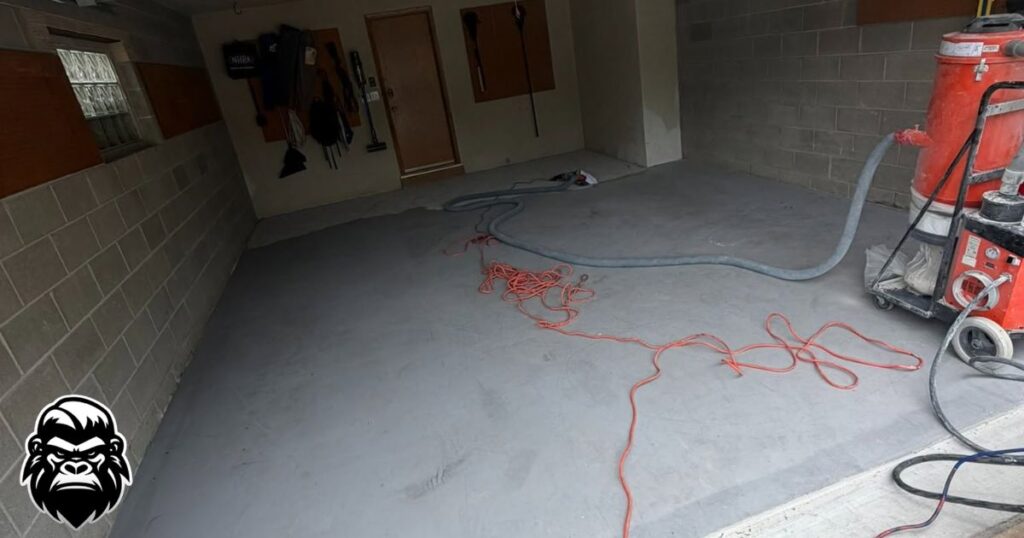
Epoxy garage floor peeling in Naperville, IL, problems usually start with poor prep, trapped moisture, weak concrete, or a coating system that cannot handle Illinois’s garage conditions. The coating may lift near tire paths, garage doors, cracks, or areas where snow and road salt sit in winter. Peeling is not a normal part of epoxy flooring. It points to a bond failure between the epoxy floor coating and the concrete below.
In Naperville, Addison, Lombard, Elmhurst, Wheaton, Downers Grove, and nearby suburbs, garages face freeze-thaw cycles, wet tires, chloride residue, and humidity shifts. Gorilla Floors fixes these issues by treating the slab first and installing a full system through our garage floor coatings service.
Causes of Epoxy Garage Floor Peeling in Naperville, IL
Peeling epoxy garage floors usually fails from the bottom up. The top layer may look like the problem, but the real issue sits at the bond line. A strong epoxy floor installation needs clean, open concrete. The coating must grab the slab, not sit on top of dust, paint, oil, moisture, or weak cement paste.
When the floor does not get the right prep, the epoxy floor coating can separate under the heat of tires, water, and daily garage traffic. Naperville homes also deal with Illinois winter exposure. Cars pull in with snow, slush, road salt, and grit. That mix collects near the garage door and along tire paths.
Moisture moves into small pores and cracks. During cold snaps, the slab can expand and contract as temperatures cross the freezing point. That stress can expose shortcuts fast. The failure may show as flakes, bubbles, chips, or sheets of coating lifting from the concrete.
Poor Grinding Leaves A Weak Bond
The most common reason epoxy flooring peels is poor surface preparation. A garage floor should not receive a coating over smooth concrete, old paint, dust, curing compounds, or sealer residue.
Diamond grinding opens the concrete surface. It removes weak material and creates a profile that the coating can bond to. A quick wash or light acid treatment cannot replace mechanical prep in most residential garages. Concrete needs the right texture before epoxy floor coating installers apply the system. The surface profile matters because the coating needs both chemical and mechanical grip.
A too smooth slab creates a shallow bond. A dirty slab creates no real bond at all. This is why cheap garage coating bids often fail first at the tire paths. Hot tires press, twist, and pull on the coating. The floor may look fine for a few weeks, then the coating starts to lift where cars park.
Moisture Pushes Epoxy Off Concrete
Concrete can hold and move moisture. That matters in Naperville garages because snowmelt, spring rain, humid summers, and damp slab edges can all affect adhesion.
Moisture problems often show up as bubbles, white powder, dark patches, or peeling near cracks and joints. When vapor pushes through the slab, it can create pressure under the coating. The epoxy floor coating then loses contact with the concrete.
Attached garages can also trap humidity after wet vehicles sit overnight. The issue grows when a slab already has cracks, pitting, or open pores from salt damage.
Moisture does not always mean epoxy flooring cannot be installed. It means epoxy flooring contractors must inspect the slab, choose the right prep method, and match the system to the floor. Some garages need extra drying time, moisture review, or a better primer strategy before the finish coats go down.
Illinois Salt Damage Weakens The Surface
Road salt is a major cause of garage floor coating failure in Illinois homes. It enters the garage on tires, wheel wells, boots, and snow shovels. Once it melts into the slab, it can attack weak concrete and leave the surface dusty or pitted. Freeze-thaw cycles add more stress.
Water enters pores and small cracks, then freezes when the temperature drops. The Great Lakes region tracks these freeze-thaw cycles because they affect roads, buildings, and concrete surfaces across the Midwest. Deicing salts can also change how moisture behaves inside concrete.
Research on deicing salt and freeze-thaw damage shows why chloride exposure matters in cold climates. A coating installed over damaged concrete will not stay bonded. The damaged layer must come off first. Then cracks and pits need repair before a new epoxy floor coating can lock into sound concrete.
Old Paint Causes New Coating Failure
Many peeling floors started as painted garage floors. Paint often fails because it is thin and does not bond like a true epoxy system. It may also hide oil, moisture spots, and surface damage.
Installing epoxy flooring over old paint is risky. The new coating can only bond as well as the layer under it. When the paint lets go, the epoxy comes up with it.
A professional epoxy flooring company removes old coatings before installing a new system. That may include grinding, edge work, and detail prep around the garage door. It can take more time, but it protects the final result. Peeling garage floor repair should never mean adding another coat over loose material.
That only traps the problem. The failed layer has to be removed so the new system bonds to the concrete.
Hot Tires Can Expose Bad Prep
Hot tire pickup happens when warm tires soften or pull at a weak coating. It often appears where vehicles park every day. The coating may look stretched, stained, tacky, or peeling in tire-shaped marks.
This problem does not mean all epoxy flooring fails under vehicles. It means the installed system did not match the garage’s use, the prep was weak, or the coating did not cure properly.
Naperville garages see frequent temperature swings. A car may come in from a hot summer driveway or a salted winter road. Tires apply heat, pressure, and turning force to the same spots on the floor.
A stronger system uses proper grinding, a quality epoxy base, and the right protective topcoat. Gorilla Floors builds epoxy flooring as a layered system, not a thin film placed over dirty concrete.
Cracks And Joints Need Repair First
Garage cracks are not always a reason to avoid epoxy floor installation. They are a reason to slow down and repair the floor before coating.
Open cracks allow moisture and salt to collect. Joints can also trap debris and old coating residue. When installers coat over these areas without proper repair, peeling often starts at the weakest points.
Crack repair can include cleaning, filling, grinding, and leveling selected areas. The repair method depends on crack size, movement, and slab condition.
Some cracks may still show as part of the concrete structure. A good estimate should explain that before work begins. The key is to create a stable surface so the epoxy floor coating does not bridge over dirty gaps and fail later.
The Wrong Coating System Can Peel Early
Not every garage needs the same coating system. A storage garage differs from a daily parking garage. A slab with salt damage differs from clean, new concrete.
Some floors need a full flake system for texture and coverage. Some need a stronger topcoat for tire traffic and cleaning. Some need a faster curing system when the garage must return to use sooner.
A flake system flooring finish can help hide normal dirt, salt marks, and small surface flaws after proper prep. It also adds texture, which matters when wet tires and boots bring moisture into the garage.
The wrong system can peel even when the color looks right. The right system starts with the floor condition, not the sample board.
Cure Time And Weather Matter
Epoxy floor coating needs the right installation window. Temperature, humidity, slab condition, and cure time all affect the result. Illinois weather can move fast. Spring and fall may bring cool nights and damp air. Summer can bring humid garage conditions.
Winter installs need careful planning because cold concrete can slow cure and affect adhesion. A garage floor should not go back into service too early. Foot traffic, storage bins, tools, and vehicle tires can damage a coating before it reaches proper cure.
The estimate should state when light use can start and when vehicles can return. That timeline may change based on the system. A fast cure option like polyaspartic flooring can help in some cases, but the slab still needs correct prep.
Warning Signs Before Full Failure
Peeling usually gives warning signs before the whole floor fails. Edges may lift near the garage door. Small chips may appear around cracks. The surface may turn cloudy, dusty, or rough near tire paths.
Bubbles can point to moisture or trapped air. White powder can point to concrete dusting or moisture movement. Random flakes can point to poor adhesion or a weak old coating under the surface.
These signs matter because early repair can be smaller than full replacement. Once water and salt move under the coating, the failure can spread. Photos help, but an in-person inspection gives the clearest answer. Gorilla Floors can review the slab, explain the cause, and show relevant finish examples from past work before recommending the next step.
How We Stop Peeling From Coming Back
A lasting garage floor starts with the removal of failed material. We do not treat peeling as a color problem. We treat it as a slab and bond problem.
The floor gets inspected for moisture signs, cracks, salt damage, oil, soft concrete, and existing coatings. Then the surface gets mechanically prepared so the new epoxy floor coating can bond to sound concrete.
Repairs come before the finish system. That can include crack treatment, pitted area repair, edge prep, and cleaning. After that, the right epoxy base, broadcast, and topcoat can be installed for garage use.
The process takes more care than a basic paint job, but it gives the floor a real chance to last in Naperville and nearby Illinois suburbs.
What To Ask Before Hiring Installers
The best epoxy floor installers explain failure risks before they quote the job. They should talk about grinding, moisture, old coatings, cracks, cure time, and topcoat choice.
Ask how they remove old paint. Ask what happens near the garage door. Ask how they handle salt pitting. Ask when vehicles can return. Ask what system fits your garage and why.
A trustworthy concrete coating company does not need to scare you. It should give clear answers based on the slab. The quote should describe the work enough for you to compare quality, not just price.
Gorilla Floors serves Naperville, Addison, Lombard, Elmhurst, Oak Brook, Downers Grove, Wheaton, Chicago, and nearby Illinois areas with epoxy flooring services made for residential garages.
FAQs About Peeling Epoxy Garage Floors
Why Does My Epoxy Garage Floor Peel Near Tire Paths?
Peeling near tire paths often comes from weak prep, hot tire pickup, old paint under the coating, or a coating system that lacks a strong topcoat.
Can Peeling Garage Floor Epoxy Be Repaired?
Peeling garage floor epoxy can be repaired when the failed material is removed first. Coating over loose epoxy usually causes the same problem again.
Does Moisture Cause Epoxy Floor Coating Failure?
Yes. Moisture vapor, damp cracks, and snowmelt can weaken adhesion. The slab needs review before epoxy floor installation starts.
Why Did My Garage Coating Fail After One Winter?
One Illinois winter can expose poor prep, salt damage, thin coatings, and weak concrete. Snowmelt and road salt often speed up visible failure.
Can Epoxy Flooring Go Over Old Garage Paint?
Epoxy flooring should not go over loose or weak paint. The old coating must be removed so the new system bonds to the concrete.
Are Concrete Coatings Better Than Garage Paint?
Professional concrete coatings offer stronger bonding, thicker protection, and better wear resistance than basic garage paint when installed over prepared concrete.
How Do Epoxy Flooring Contractors Prevent Peeling?
Good epoxy flooring contractors grind the slab, remove contamination, repair cracks, check moisture risks, and install the right coating system.
Should I Replace Or Recoat A Peeling Garage Floor?
It depends on how much the coating has failed. Heavy peeling usually needs full removal, surface prep, repairs, and a new epoxy floor coating system.
Fix Your Peeling Garage Floor The Right Way
Peeling epoxy in a Naperville garage is a warning that the coating has lost its bond. The cause may be moisture, salt damage, poor grinding, old paint, weak concrete, or the wrong system for Illinois weather.
Gorilla Floors solves the problem by starting with the slab. We inspect the concrete, remove failed material, repair problem areas, and install a coating system that fits the garage.
Start with garage floor coatings when peeling, flaking, or tire pickup starts showing on your floor. To get a clear inspection and quote, send your project details through contact.
